
As consumer expectations evolve, commercial bakery manufacturers face a trilemma: maintaining long-term freshness, ensuring operational consistency, and simplifying ingredient declarations. Modern bakery enzyme technology has emerged as one of the most effective solutions to address all three challenges simultaneously.
While functional enzymes have supported baking for decades, precise advancements in enzyme specificity now allow formulators to optimize dough rheology, extend shelf life, and achieve clean label objectives without compromising taste, volume, or texture.
What Are Enzymes in Commercial Baking?
Bakery enzymes are naturally occurring protein catalysts that accelerate specific biochemical reactions during mixing, proofing, and baking.
Unlike traditional chemical dough conditioners (e.g., ADA or DATEM), enzymes perform targeted functional roles during processing before becoming completely inactivated (denatured) by heat during the baking process.
Because enzymes act as processing aids that do not survive active in the final baked good, they allow commercial bakeries to simplify labeling while engineering superior finished-product characteristics.
4 Key Commercial Benefits of Bakery Enzyme Technology
1. Extended Freshness & Anti-Staling
Maintaining crumb softness and elasticity across distribution networks is critical to reducing food waste and returns.
-
Mechanism: Specialized maltogenic amylases and lipases modify starches and lipids during baking, preventing amylopectin recrystallization (retrogradation)—the primary driver of staling.
-
Impact: Preserves crumb resilience, crumb softness, and moisture perception over an extended shelf life without creating a sticky or gummy texture.
2. Improved Dough Handling & Machinability
Flour quality and protein content fluctuate between crops, creating operational variability on automated high-speed production lines.
-
Mechanism: Proteases and xylanases (hemicellulases) balance gluten elasticity and extensibility, while glucose oxidases strengthen weak flour networks.
-
Impact: Reduces dough snapping, improves dough machineability, increases absorption, and stabilizes tolerance against mechanical shock and extended proof times.
3. Enhanced Product Quality & Visual Appeal
-
Mechanism: Tailored enzyme complexes target specific flour fractions to maximize gas retention during fermentation.
-
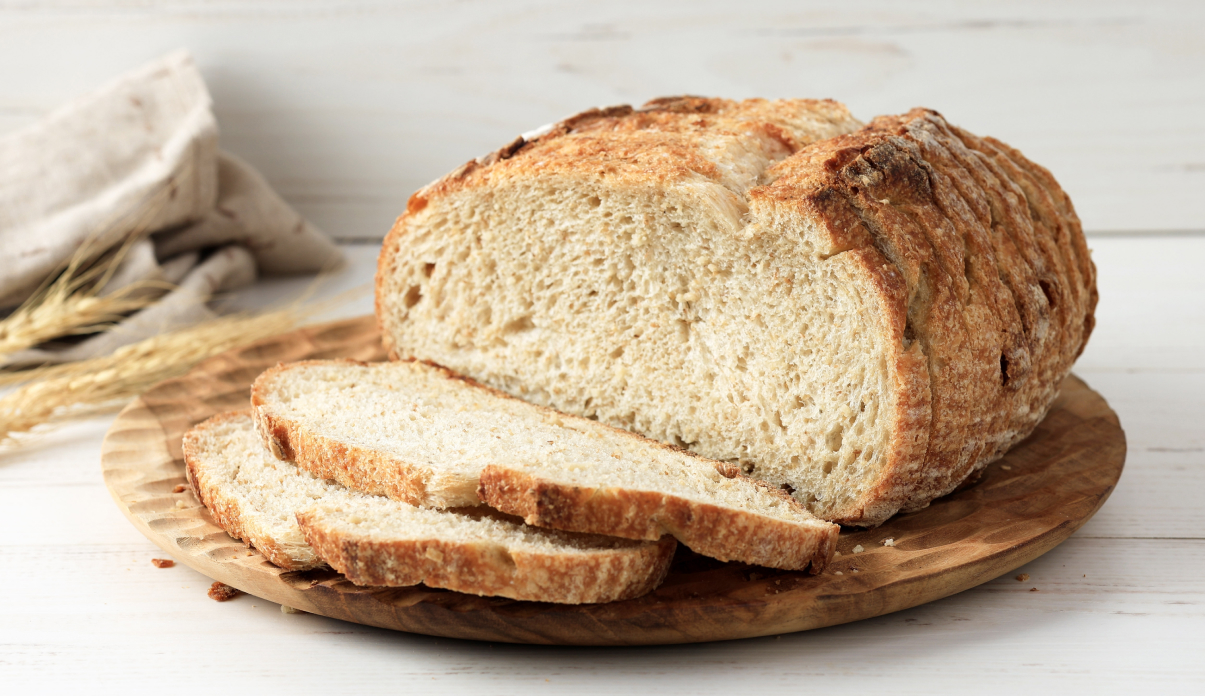
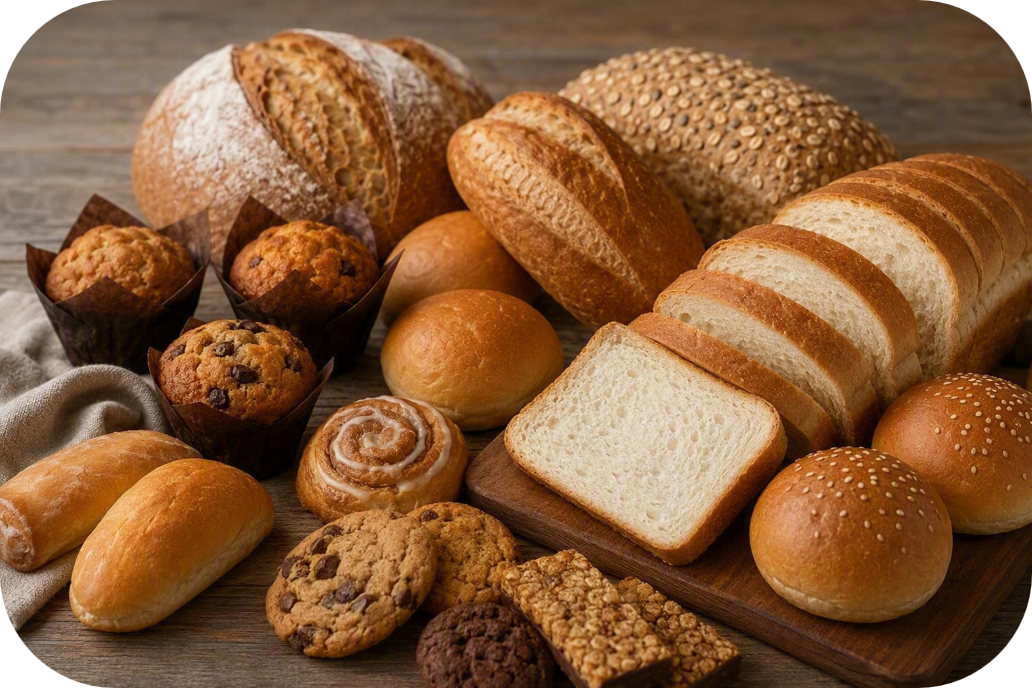
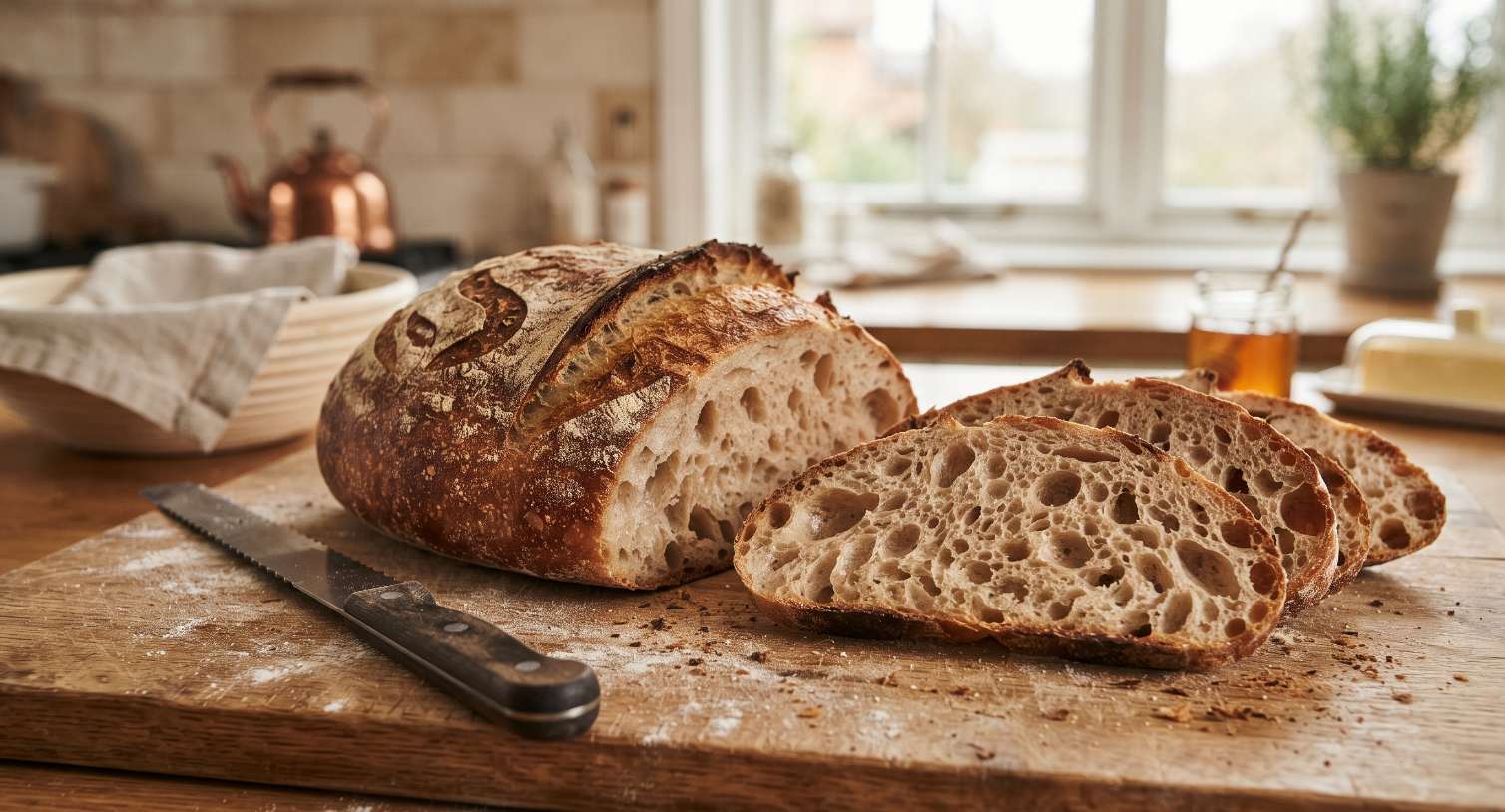
Impact: Delivers higher loaf volume, a finer and more uniform crumb structure, improved crust color via Maillard reaction precursor release, and better oven spring in sandwich breads, artisan loaves, and sweet goods.
4. Clean Label Ingredient Optimization
Consumers actively avoid chemical-sounding additives like azodicarbonamide (ADA), sodium stearoyl lactylate (SSL), or mono- and diglycerides.
-
Mechanism: Enzymes replicate the emulsifying, strengthening, and softening properties of synthetic conditioners.
-
Impact: Replaces synthetic additives with functional enzyme solutions, allowing manufacturers to clean up ingredient decks while meeting strict retailer standards.
Application Expertise: Overcoming Formulation Challenges
Enzymes are highly sensitive to processing environments. An enzyme blend optimized for standard white bread will not yield the same performance in a high-fiber or frozen-dough application.
Key Variables Influencing Enzyme Performance:
-
pH and Temperature Profiles: Enzyme activity rates peak within specific thermal and pH ranges during proofing and early baking stages.
-
Water Activity ($a_w$) and Mixing Energy: Hydration levels alter substrate accessibility for enzymes during dough development.
-
Synergistic Formulations: Combining enzymes (e.g., xylanase + amylase + lipase) often produces superior crumb structure and shelf life compared to single-enzyme systems.
Because minor variations in dosage can impact dough machinability or final volume, working with technical application specialists ensures optimal dosing, smooth scale-up, and predictable performance on commercial lines.
Looking Ahead
As bakery manufacturers like Thymly Products continue to balance quality, efficiency, shelf life, and clean-label objectives, enzyme technology will remain an increasingly valuable formulation tool.
By understanding how enzymes interact with dough systems and finished products, manufacturers can unlock new opportunities for innovation while delivering the consistent quality consumers expect.
Frequently Asked Questions (FAQ)
Are enzymes considered processing aids or ingredients on food labels?
In many jurisdictions, because enzymes perform their functional activity during processing and are heat-inactivated during baking, they can be categorized as processing aids or declared simply by their functional name (e.g., “Enzymes”), helping support cleaner, simpler ingredient statements.
Can enzymes completely replace chemical emulsifiers like DATEM or SSL?
Yes. Tailored combinations of lipases, phospholipases, and xylanases can mimic the crumb-softening and dough-strengthening characteristics of chemical emulsifiers like DATEM, SSL, and mono-/diglycerides in most commercial bread and roll applications.
How do enzymes help reduce bakery supply chain waste?
By inhibiting starch retrogradation, anti-staling enzymes extend the soft shelf life of baked goods. This extends distribution radius capability and significantly reduces retail unsold returns (“stales”).
Summary Checklist for Bakery Formulators
-
[x] Audit Current Formula: Identify synthetic emulsifiers or dough conditioners targeted for removal.
-
[x] Define Target Performance: Determine whether primary goals focus on shelf-life extension, machinability, or clean labeling.
-
[x] Test Synergistic Blends: Evaluate multi-enzyme complexes rather than single-enzyme solutions for compounding benefits.
-
[x] Partner with Technical Experts: Run pilot-scale trials to validate enzyme activity across specific mixing, proofing, and baking parameters.