The global bakery industry is undergoing a major transformation driven by consumer demand for clean label products. Today’s shoppers are increasingly focused on transparency, seeking foods with simple, recognizable ingredients and fewer artificial additives. As a result, traditional functional ingredients such as potassium bromate and DATEM (diacetyl tartaric acid esters of mono- and diglycerides) are being replaced by clean label alternatives that deliver both performance and consumer trust.
The clean label ingredients market has seen significant growth in recent years. The global clean label ingredients market was valued at approximately $44.97 billion in 2025 and is projected to reach over $83 billion by 2034¹. Within bakery, the clean label ingredients segment is expected to grow from $4.85 billion in 2025 to $7.64 billion by 2032². This growth is fueled by strong consumer demand for natural and minimally processed products. Research indicates that roughly 70% of consumers are more likely to purchase products labeled as clean or natural³.
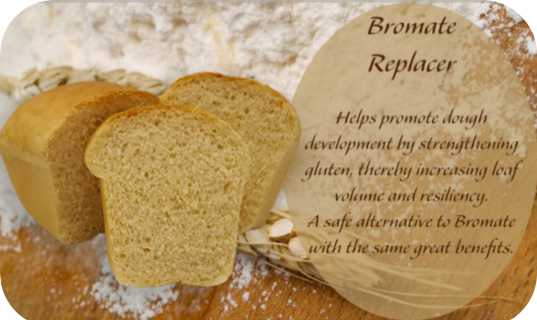
Potassium bromate and DATEM have long played essential roles in baking. Bromate acts as an oxidizing agent that strengthens gluten, improving dough elasticity and loaf volume. DATEM functions as an emulsifier, enhancing dough stability, texture, and shelf life. However, both ingredients are increasingly under scrutiny.
Potassium bromate has been classified as a possible human carcinogen by the International Agency for Research on Cancer and has been banned in numerous countries due to links with cancer and kidney damage observed in animal studies⁴. This has led to regulatory shifts and growing consumer concern about its use in baked goods.
DATEM, while still permitted by regulators, faces growing skepticism due to its synthetic origin and emerging research suggesting potential gut health concerns associated with emulsifiers⁵. Additionally, consumers are increasingly avoiding ingredients with complex or chemical-sounding names, further driving the demand for cleaner alternatives.
To meet these challenges, the industry has rapidly adopted clean label replacers. Enzyme-based solutions are among the most effective alternatives. Enzymes such as glucose oxidase can replace bromate by strengthening dough naturally, while phospholipases and lecithin can replicate the emulsifying effects of DATEM⁶. These solutions improve dough strength, volume, and crumb structure while aligning with clean label expectations.
Other strategies include fermentation-based processes, plant-based emulsifiers, and functional proteins that enhance structure and stability. These approaches allow manufacturers to maintain product quality while delivering ingredient transparency.
Clean label bromate and DATEM replacers are critical for the future of baking. They enable manufacturers to align with consumer expectations, adapt to evolving regulations, and differentiate products in a competitive marketplace. Most importantly, advancements in ingredient technology now allow bakers to achieve the same performance benefits without compromising on label simplicity.
As the industry continues to evolve, clean label solutions will remain a key driver of innovation. Companies that embrace these technologies will be well-positioned to meet the demands of modern consumers and lead the next generation of baking innovation.
Sources
- https://www.fortunebusinessinsights.com/clean-label-ingredients-market-115462
- https://pmarketresearch.com/chemi/clean-label-bakery-ingredients-market/
- https://www.emergenresearch.com/industry-report/clean-label-bakery-ingredients-market
- https://legalclarity.org/potassium-bromate-health-risks-bans-and-food-safety/
- https://www.eadditives.com/e472e-datem/
- https://www.bakingbusiness.com/articles/53734-enzyme-blends-expand-what-can-be-achieved-in-bakery-formulations